


Cyclist Hit by a Car: What to Do and How to Get Paid
Hit by a car while riding? Learn what to do at the scene, how fault and insurance work,…
Read moreCall For A Free Consultation
Menu
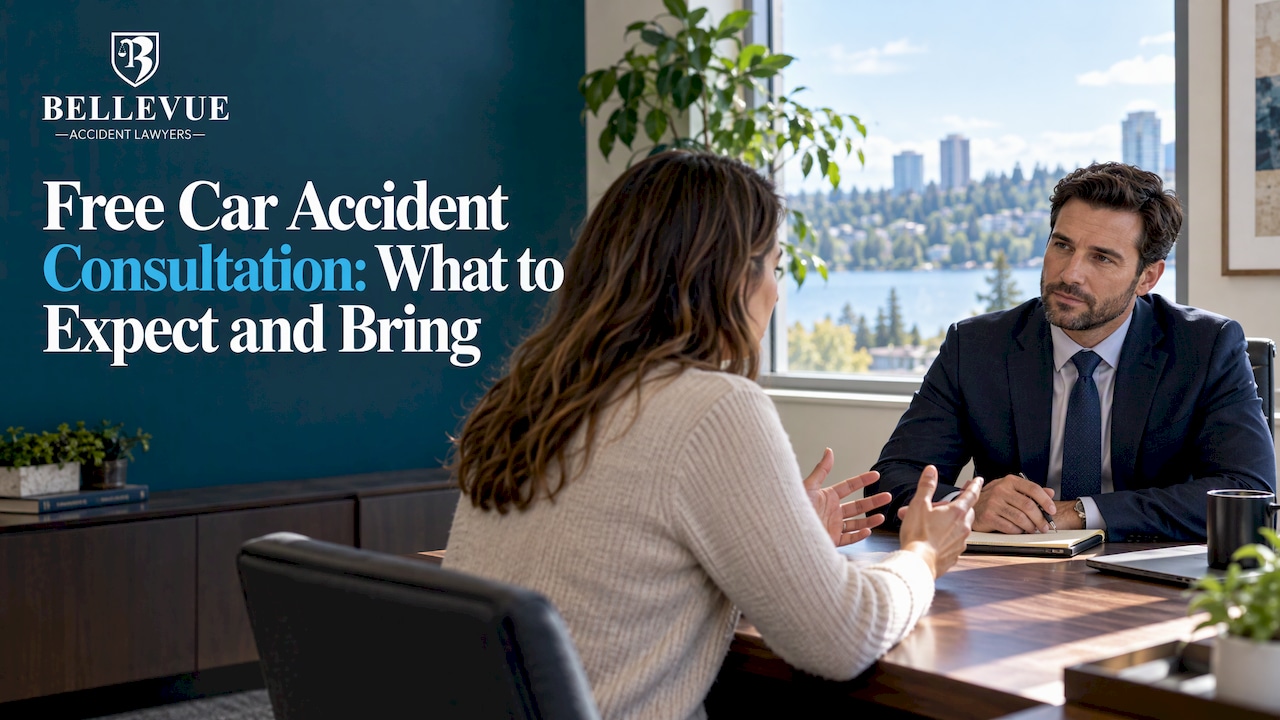
A free car accident consultation is a no-cost conversation with a personal injury attorney about what happened, what your case may be worth pursuing and how the firm would work with you. You don’t pay for it, and you don’t have to hire anyone afterward. At Select Law, the first conversation is free, and if we take your case we are paid only if you recover compensation. This guide walks through what the meeting covers, how to prepare, which questions to ask and how fees and written agreements work, so you walk in ready and walk out able to decide.
The American Bar Association (ABA) describes the first meeting with a lawyer as a chance to get acquainted before you decide whether to hire them, and notes that many lawyers charge nothing for an initial consultation. In personal injury work, that is the norm. It can happen by phone, by video or in an office.
A typical consultation covers four things:
A free consultation is not a final answer on what your claim is worth. Value depends on medical records, how your recovery goes and the insurance coverage available, and an honest attorney won’t put a number on it in the first twenty minutes. What you should leave with is a clear picture of your options and the next step.
If you were hurt in a crash caused by someone else, the consultation is worth having early. That includes drivers and passengers in ordinary collisions, riders in motorcycle crashes, pedestrians and cyclists hit by cars, people hurt in rideshare vehicles, and people hit by uninsured, drunk or hit-and-run drivers. It also includes families dealing with a wrongful death. Select Law handles auto accident claims from offices in Bellevue, WA, Scottsdale, AZ and Lake Oswego, OR, as well as motorcycle, bicycle, semi-truck and pedestrian cases.
If you only need to file a small property damage claim with an insurer and have no injuries, you may not need an attorney at all. The consultation matters when you have injuries, ongoing treatment, missed work or a dispute over fault.
Consultations usually run 30 minutes to an hour, according to the Lane County, Oregon law library. That is not much time, so preparation matters.
The same Lane County guidance recommends a one-page outline of the facts and a timeline, and says to spend no more than about a quarter of the meeting explaining your situation so there is time left for the lawyer’s advice. For a crash, a good outline includes:
Bring whatever you have. Nothing needs to be complete.
If an adjuster has already contacted you, tell the attorney what was said and whether you gave a recorded statement.
Lane County’s law library also suggests writing down your ideal outcome and a realistic one before you go, and acknowledges these may differ. Maybe you want medical bills paid and lost income covered. Maybe a family member’s care is the priority. Knowing this keeps the conversation on your goals.
Be honest about everything. The ABA says answering your lawyer’s questions fully and honestly saves time and helps the lawyer do a better job. It adds that facts that reflect poorly on you matter most, because they will almost certainly come out if the case goes to trial.
In a car accident case, facts people tend to leave out include:
None of these automatically ends a claim. An attorney who knows about them early can plan around them. An attorney who learns about them from the insurer’s lawyer later cannot.
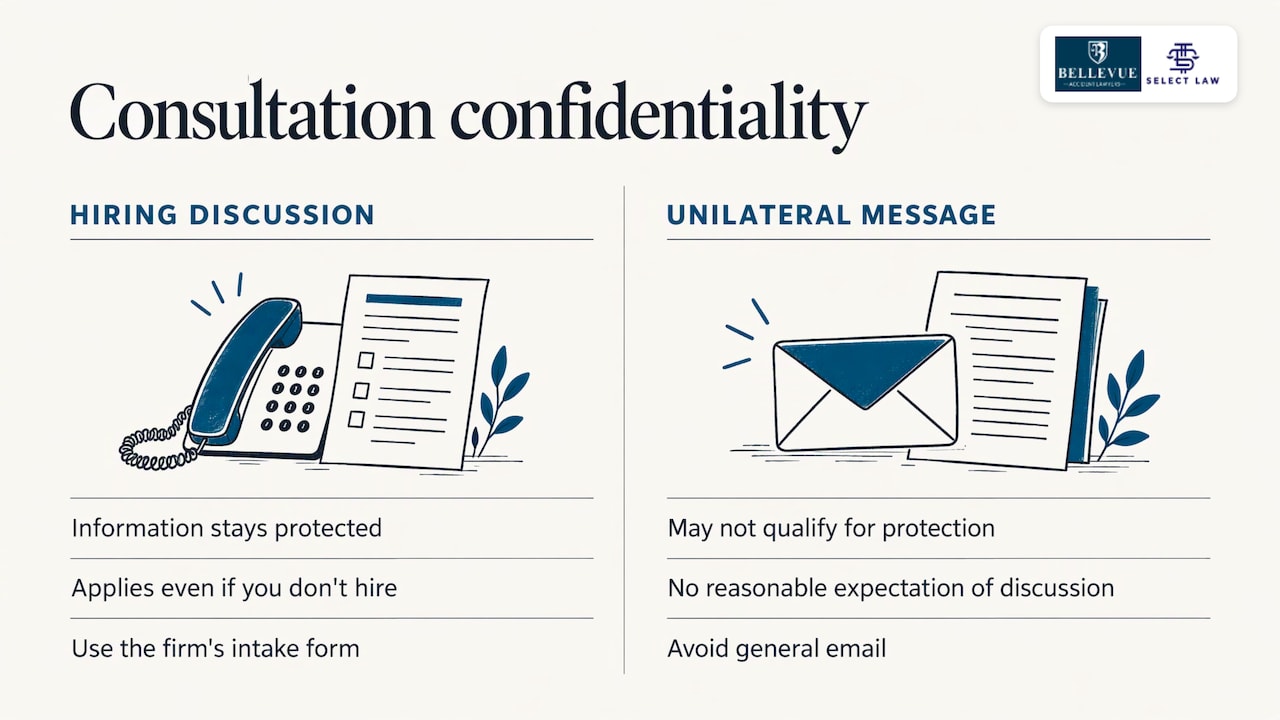
Yes. Under ABA Model Rule 1.18, a person who discusses the possibility of hiring a lawyer is a prospective client, and the lawyer may not use or reveal what you shared even if you never hire them. The rule’s commentary notes that this duty applies however brief the first conversation is. The ABA’s Formal Opinion 492 confirms that information from a prospective-client consultation stays protected without a formal relationship. These are model rules, and each state adopts its own version, but the principle is widely followed.
One caution: protection assumes a real discussion about hiring. The ABA opinion notes that someone who sends information unilaterally, with no reasonable expectation of a discussion, may not qualify. Use the phone number or intake form the firm provides for a consultation rather than a general email address.
The ABA says that at the first meeting you are the one doing the hiring. Its consumer guide to questions to ask a lawyer is a good base. Adapted for a car accident claim:
About experience
About communication
Direct access to your attorney is how Select Law approaches client service: we put you in contact with an attorney, not a call center, and give each client personal attention.
About the case
About money
The ABA also advises asking for a written statement of how fees will be charged, which brings us to the next section.
Most injury attorneys work on contingency. The ABA explains that the lawyer accepts a fixed percentage of the recovery, often one third, and that if you lose you don’t pay the attorney for the work done. The Oklahoma Bar Association puts the usual range between 25% and 50% of the amount recovered. The percentage can differ between firms and often depends on whether the case settles or goes to trial, so compare it in writing.
Select Law works on a no fee unless we win basis. For a fuller breakdown, see our guide to personal injury lawyer costs and when you pay.
The attorney’s fee is the percentage. Case expenses are separate: court filing fees, deposition costs, records fees and similar charges. The ABA notes that you probably still pay those win or lose under many arrangements. That is why the agreement must spell out how expenses are handled.
ABA Model Rule 1.5© requires a contingent fee agreement to be in writing and signed by the client. It must state:
At the end of the matter, the lawyer must give you a written statement showing the outcome and, if there was a recovery, how your share was calculated. Keep your copy of the agreement; the Oklahoma Bar Association advises that both sides should hold a copy.
Here is a simple worked example. Suppose a hypothetical case settles for $90,000, the fee is one third and expenses are $3,000. If expenses come out first, the fee applies to $87,000 and is $29,000, leaving you $58,000 before any medical liens. If the fee is calculated first, it is $30,000 and you receive $57,000. The order is a small difference here and a bigger one in larger cases, which is why the agreement should say which applies.
Evidence fades. Skid marks wash away, witnesses move, vehicles get repaired and insurers start building their file the day of the crash. Washington, Arizona and Oregon each set their own deadline for filing an injury lawsuit, and the deadline can be shorter for claims involving a government vehicle or a wrongful death. A consultation tells you which deadline applies to you.
If you’re still working out your first steps, our guides cover what to do after a motor vehicle accident and the steps to take to file an injury claim. Get medical care first. Your health comes before any paperwork.
You don’t have to decide in the room. The Oklahoma Bar Association suggests weighing the lawyer’s area of expertise, prior experience, reputation, location, fees, expected time and communication skills. A short checklist helps:
| Question | What a good answer looks like |
|---|---|
| Did the attorney listen and explain clearly? | You understood the process in plain terms |
| Is the fee in writing? | Percentages, expenses and their order are all stated |
| Do you know who will handle your case? | A named attorney and a clear way to reach them |
| Did they discuss your goals? | The plan matches what you said you wanted |
| Do you feel comfortable? | You could tell them the awkward facts |
If the answers are yes, you sign the agreement and the firm starts work: gathering records, dealing with the insurers and preparing your demand. Our overview of contract basics in personal injury negotiations explains what that stage looks like, and the personal injury complaint covers what happens if a lawsuit is filed.
We built our practice around two things clients tell us matter after a crash: talking to an attorney directly, and not paying anything unless we win.
An injured person is already dealing with medical bills, time away from work and calls from insurance adjusters. The first conversation should not add a bill to that. So the consultation is free, and our representation is on a no fee unless we win basis.
We also think the consultation should serve you whether or not you hire us. Come with questions, ask about fees and ask who will handle your case. A client who understands the agreement they sign is the client we want to work with.
Our offices in Bellevue, Scottsdale and Lake Oswego handle car, motorcycle, bicycle, semi-truck and pedestrian cases, as well as dog bites, slip and falls, workplace injuries and wrongful death. Whatever happened, start with a conversation.
select
If you were hurt in a crash in Washington, Arizona or Oregon, Select Law offers free consultations and case evaluations. You speak with an attorney about what happened, get a straight answer on your options and see the fee terms before you decide. Representation is no fee unless we win.
Start on our car accident page or contact us through Select Law to arrange your free consultation.
No. The meeting is a chance for you to learn about the firm and for the attorney to review your situation. You decide afterward whether to sign a fee agreement, and you can take time to think it over.
Plan for 30 minutes to an hour. A written timeline and your documents make that time go further.
Yes. Shared or disputed fault is one of the main things an attorney can assess. Tell the attorney everything, including facts that look bad for you, since that helps them judge the claim accurately.
It means you owe the attorney’s fee only if there is a recovery, and the fee comes out of that recovery. Case expenses are a separate item, so ask how they are handled and make sure the written agreement says so.
Yes. ABA Model Rule 1.18 protects information from a prospective client even if no representation follows. Your state’s version of the rule governs the details.
Created with BabyLoveGrowth to grow your link profile
Hit by a car while riding? Learn what to do at the scene, how fault and insurance work,…
Read more
What dog bite compensation can cover, who pays, how the claim and settlement process works, and the deadlines…
Read more
Hurt in a motorcycle crash in Portland? Learn what to do first, how Oregon insurance rules affect your…
Read more
Parham Hakimi is the founder of Select Law. Parham is passionate
about helping clients get a fresh start and victims who have
been wronged by the acts of others... Read more


